
-
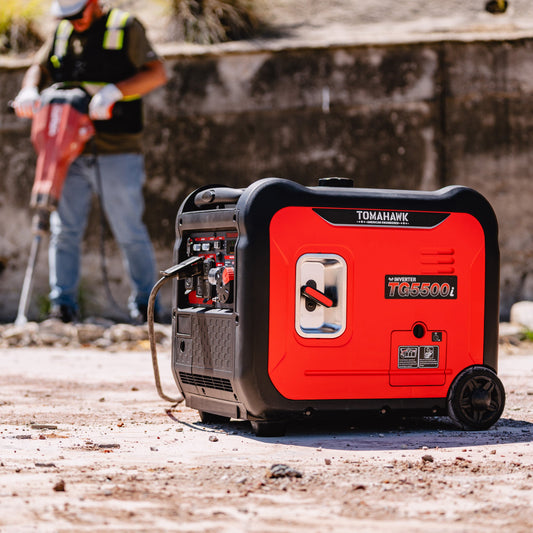
Tomahawk TG5500i 5500W Inverter Generator | E-Moto Charging, 120V/240V & Backup Power
Regular price $1,899.99Regular priceUnit price per -
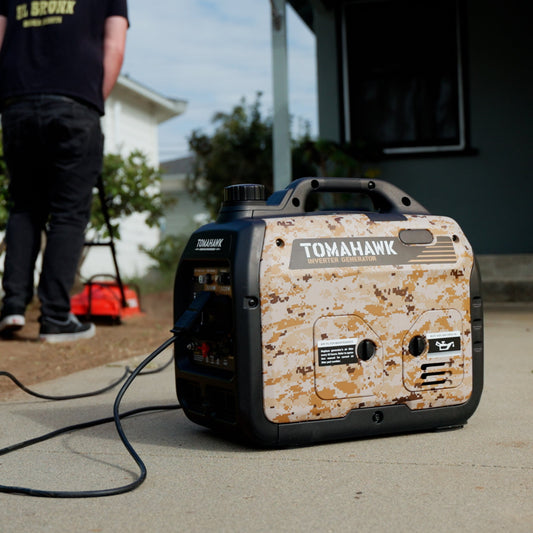
Tomahawk TG3000i-BRV 3000W Camo Inverter Generator | E-Moto Charging & Backup Power
Regular price $989.99Regular priceUnit price per -
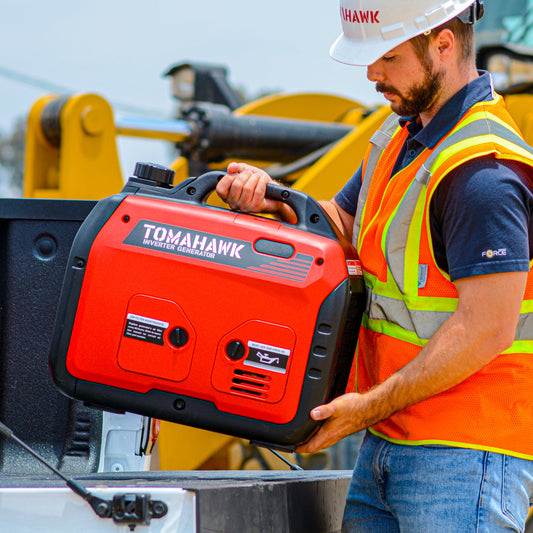
Tomahawk TG2000i 2100W Inverter Generator | Super quiet E-Moto Charging, Camping & Backup Power
Regular price $899.99Regular priceUnit price per -
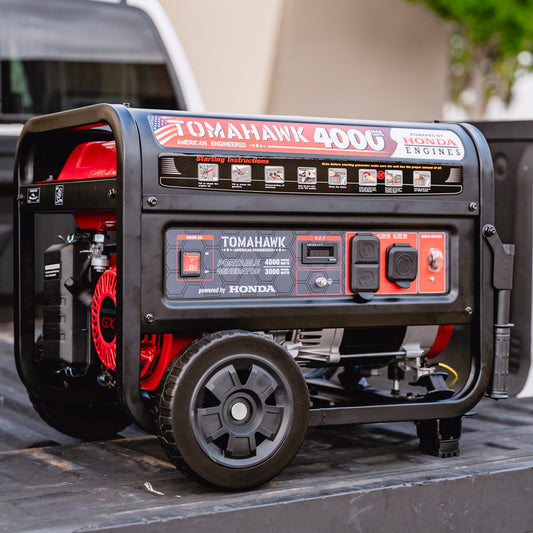
Tomahawk TG4000H 4000W Honda Generator | E-Moto Charging & Backup Power
Regular price $1,799.99Regular priceUnit price per -
Tomahawk TG12000iT 12000W Tri-Fuel Inverter Generator | E-Moto Charging, Home Backup & 120V/240V Power
Regular price $4,499.99Regular priceUnit price per -
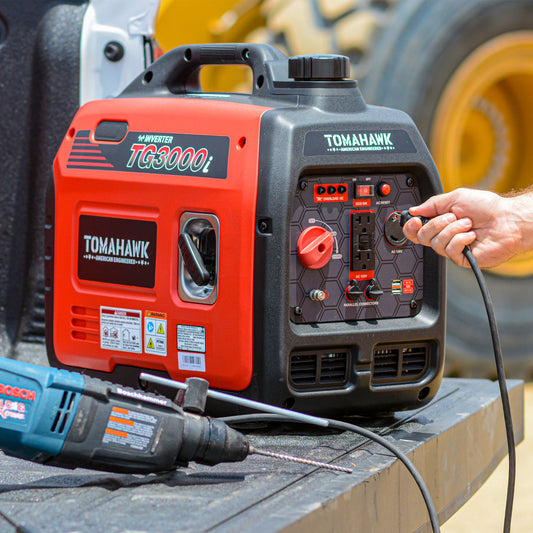
Tomahawk TG3000i 3000W Inverter Generator | Super Quiet E-Moto Charging, & Backup Power
Regular price $1,099.99Regular priceUnit price per -
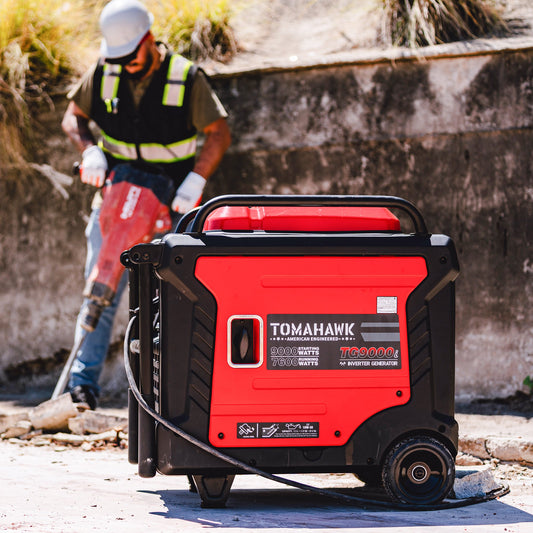
Tomahawk TG9000i 10500W Inverter Generator | E-Moto Charging, 120V/240V & Backup Power
Regular price $3,999.99Regular priceUnit price per -
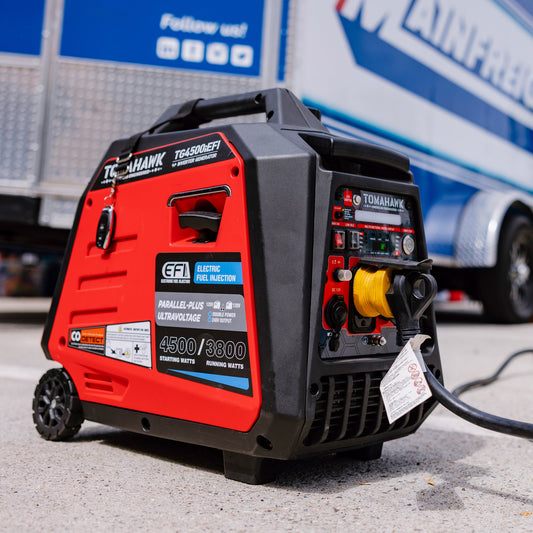
Tomahawk TG4500iEFI 4500W EFI Inverter Generator | E-Moto Charging & Backup Power
Regular price $1,599.99Regular priceUnit price per








Power Stations & Generators
Portable Power for E-Bikes, E-Motos, Camping, Home Backup & More
Stay powered wherever you ride with portable power stations, solar generators, gas generators, propane generators, solar panels, expansion batteries, and backup power solutions from REV Rides.
Whether you're trying to charge an electric dirt bike at the trailhead, keep your e-bike running during a camping trip, recharge multiple bikes at an event, or have emergency power available at home, the right generator or portable power station can give you access to AC power almost anywhere.
For e-moto riders, portable power opens up entirely new possibilities. Instead of ending your riding day when the battery gets low, a properly sized power station or generator can allow you to bring your charger with you and recharge away from the electrical grid.
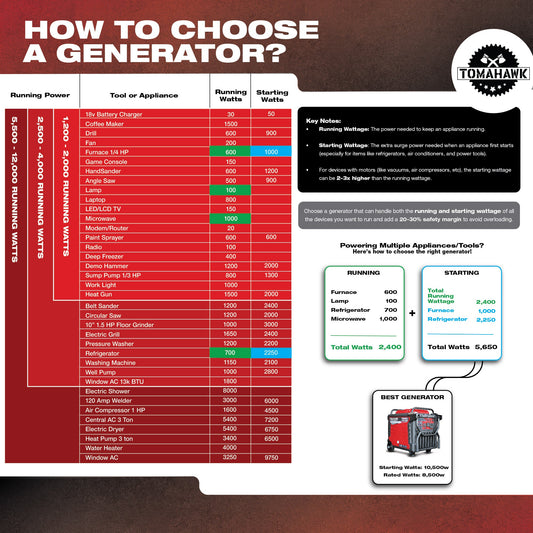
What Size Generator Do I Need to Charge an E-Moto?
The first thing to look at is the power consumption of your bike's charger.
Your generator or power station needs to provide enough continuous AC output to operate the charger safely. A charger rated for 1,000 watts, for example, should be paired with a power source capable of comfortably supplying more than 1,000 watts continuously.
We recommend leaving additional output capacity rather than operating a generator or power station continuously at its maximum rating.
Depending on the charger being used, many modern high-performance e-motos may use chargers drawing roughly 700W to 1,500W+ from the AC outlet. Higher-output aftermarket or fast chargers may require considerably more.
Important Generator & Power Station Specs
- Continuous AC Output (Watts): Determines whether the generator or power station can continuously operate your charger.
- Peak / Surge Output (Watts): The maximum short-duration output available. For e-moto charging, continuous output is generally the more important specification.
- Battery Capacity (Wh or kWh): For portable power stations, this determines approximately how much stored energy is available to recharge your bike.
- Pure Sine Wave Inverter: A pure sine wave inverter is preferred when powering battery chargers and sensitive electronic equipment.
- 120V AC Outlets: Most North American e-bike and e-moto chargers use a standard 120V AC outlet. Always verify the input requirements printed on your specific charger.
- Runtime: For gas and propane generators, check how long the generator can operate at different loads before requiring additional fuel.
- Solar Input: For battery power stations, check the maximum supported solar input if you plan to recharge your system off-grid.
What Size Power Station Do I Need for an E-Moto?
Choosing a battery power station is slightly different from choosing a fuel-powered generator because you need to consider both AC output and stored battery capacity.
For example, a power station with a 2,000W inverter may have enough output to operate a 1,000W charger, but if the power station only stores 1,000Wh of energy, it cannot provide a full recharge to an e-moto with a 3,000Wh battery.
Many performance electric dirt bikes and e-motos now have battery packs in the 2,500Wh to 5,000Wh+ range.
How to Calculate Your E-Moto Battery Capacity
A quick way to estimate battery capacity is:
Battery Voltage × Amp Hours = Watt Hours
For example, a 72V 40Ah battery has approximately:
72V × 40Ah = 2,880Wh (2.88kWh)
A theoretical full recharge from completely empty would therefore require approximately 2.88kWh before accounting for charging and inverter losses.
Real-world charging is not 100% efficient. Energy is lost through the power station's inverter, the bike's charger, wiring, heat, and the battery charging process. Because of this, a power station should have more usable capacity than the amount of energy you actually want to add to the bike.
For riders looking for meaningful e-moto charging capability, larger 2kWh, 3kWh, 4kWh, 5kWh, and expandable power stations can make significantly more sense than smaller camping-focused units.
Gas or Propane Generator vs. Portable Power Station
Both can work well for off-grid e-moto charging, but each has different advantages.
Portable Power Stations
Battery power stations are quiet, require no gasoline, produce no exhaust at the point of use, and can often be recharged from wall power, vehicles, or compatible solar panels depending on the system.
They're a great option for camping, race events, pits, garages, vans, RVs, emergency backup, and locations where generator noise or exhaust would be a problem.
Gas & Propane Generators
Fuel-powered generators can be an excellent option when you need to produce a large amount of energy for extended periods.
As long as you have fuel available, you can continue producing electricity without waiting for a large battery power station to recharge.
For charging modern e-motos, pay particular attention to continuous output, inverter technology, fuel runtime, noise level, and outlet configuration.
Dual-fuel generators capable of running on gasoline or propane can provide additional flexibility for emergency preparedness, camping, race weekends, and off-grid riding.
IMPORTANT: Never operate a gasoline, propane, or other combustion-powered generator indoors, inside a garage, vehicle, trailer, tent, or other enclosed or partially enclosed area. Always follow the generator manufacturer's ventilation and carbon monoxide safety requirements.
Solar Charging for E-Bikes & E-Motos
Many portable power stations can be paired with solar panels, allowing the power station to recharge while you're away from the electrical grid.
Solar can be especially useful for multi-day camping trips, RV setups, vans, race pits, cabins, and emergency backup systems.
When comparing solar systems, consider:
- Maximum solar input wattage
- Maximum solar voltage and current
- Solar panel output
- Connector compatibility
- Power station battery capacity
- Expected sunlight conditions
A 400W solar array does not necessarily produce 400W continuously throughout the day. Solar charging times can vary significantly depending on weather, season, panel angle, temperature, shading, and location.
Charge Your E-Moto Away From the Grid
A properly sized generator or portable power station can be used with the factory charger for many popular electric dirt bikes and e-motos, including models from E Ride Pro, Sur-Ron, Talaria, Altis, Arctic Leopard, Vetra, Rawrr, and other electric powersports brands.
The important part is properly matching the power source to the specific charger and battery you're using.
Before Choosing a Generator or Power Station
- Check your charger's AC input wattage.
- Verify your charger's required input voltage.
- Determine your bike battery's Wh or kWh capacity.
- Decide how much of the battery you actually need to recharge.
- Determine whether you need one charge, multiple charges, or simply enough power to get back to the truck.
A rider who only needs to add 30% to 50% to their battery at the trailhead may need a very different power setup than someone trying to completely recharge multiple e-motos during a full weekend of riding.
Power Your Ride & More
Portable power isn't limited to charging your bike. A properly sized power station or generator can also provide power for camping equipment, RVs, tools, air compressors, lighting, refrigerators, electronics, mobile workstations, garage equipment, events, emergency preparedness, and home backup power.
Explore REV Rides' selection of portable power stations, solar generators, gas and propane generators, solar panels, expansion batteries, and charging accessories to build a power setup capable of keeping your ride and your equipment charged wherever the next trip takes you.